
Downloads
Páginas
Publicado
Séries
Como Citar
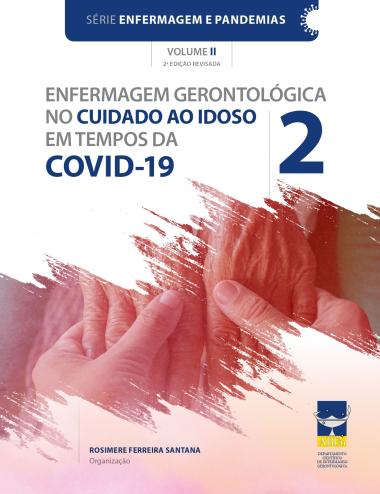
Cuidado ao idoso em distanciamento social durante a pandemia: prevenção do tromboembolismo venoso
Sinopse
O distanciamento social é uma das primeiras, e principais recomendações da Organização Mundial de Saúde (OMS) para enfrentamento da pandemia. Embora proporcione a prevenção da COVID-19 entre os idosos, o distanciamento social pode trazer algumas repercussões como compro metimento de atividades cotidianas, dos hábitos regulares de vida, das relações familiares e dos papéis sociais o que facilita o desencadeamento, agravamento ou recidiva de doenças e outros agravos à saúde
Referências
Brooks, S. K., Webster, R. K., Smith, L. E., Woodland, L., Wessely, S., Greenberg, N., & Rubin, G. J. (2020). The psychological impact of quarantine and how to reduce it: Rapid review of the evidence. The Lancet, 395(102227), 912–920. https://doi.org/10.1016/S0140-6736(20)30460-8
Yang, Y., Li, W., Zhang, Q., Zhang, L., Cheung, T., & Xiang, Y. T. (2020). Mental health services for older adults in China during the COVID-19 outbreak. The Lancet Psychiatry, 7, e19. https://doi.org/10.1016/S2215-0366(20)30079
Garcia, L. A. A., & Santos, A. S. (2020). A pandemia COVID-19 e as repercussões na atenção à saúde do idoso brasileiro. REFACS (Online), 8(3), 335–336. https://doi.org/10.18554/refacs.v8i3.4557
Hammerschmidt, K. S. de A., & Santana, R. F. (2020). Saúde do idoso em tempos de pandemia Covid-19. Cogitare Enferm., 25. https://doi.org/10.5380/ce.v25i0.72849
Constandt, B., Thibau, E., Bosscher, V., Scheerder, J., Ricour, M., & Willem, A. (2020). Exercising in times of lockdown: An analysis of the impact of COVID-19 on levels and patterns of exercise among adults in Belgium. Int. J. Environ. Res. Public Health, 17(11), 4144. https://doi.org/10.3390/ijerph17114144
Goodman-Casanova, J. M., Dura-Perez, E., Guzman-Parra, J., Cuesta-Vargas, A., & Mayoral-Cleries, F. (2020). Telehealth home support during COVID-19 confinement for community-dwelling older adults with mild cognitive impairment or mild dementia: Survey study. J Med Internet Res., 22(5), e19434. https://doi.org/10.2196/19434
Phillippe, H. M. (2017). Overview of venous thromboembolism. Am J Manag Care, 23(20 Suppl), S376‐S382. https://ajmc.s3.amazonaws.com/_media/_pdf/Overview%20of%20Venous%20Thromboembolism.pdf
Tana, C., Lauretani, F., Ticinesi, A., Prati, B., Nouvenne, A., & Meschi, T. (2018). Molecular and clinical issues about the risk of venous thromboembolism in older patients: A focus on Parkinson’s disease and Parkinsonism. Int J Mol Sci., 19(5), 1299. https://doi.org/10.3390/ijms19051299
Zhang, Z., Lei, J., Shao, X., Dong, F., Wang, J., & Wang, D. et al. (2019). Trends in hospitalization and in-hospital mortality from VTE, 2007 to 2016, in China. Chest, 155(2), 342–353. https://doi.org/10.1016/j.chest.2018.10.040
Apenteng, P. N., Hobbs, F. R., Roalfe, A., Muhammad, U., Heneghan, C., & Fitzmaurice, D. (2017). Incidence of venous thromboembolism in care homes: A prospective cohort study. Br J Gen Pract., 67(655), e130–e137. https://doi.org/10.3399/bjgp17X688873
Ahmed, J., Ornstein, K., Dunn, A., Gliatto, P., et al. (2013). Incidence of venous thromboembolism in a homebound population. J Community Health, 38, 480–485. https://doi.org/10.1007/s10900-012-9632-2
Münster, A. M., Rasmussen, T. B., Falstie-Jensen, A. M., Harboe, L., Stynes, G., Dybro, L., et al. (2019). A changing landscape: Temporal trends in incidence and characteristics of patients hospitalized with venous thromboembolism 2006–2015. Thromb Res., 176, 46–53. https://doi.org/10.1016/j.thromres.2019.02.009
Lauber, S., Limacher, A., Tritschler, T., Stalder, O., Méan, M., Righini, M., et al. (2018). Predictors and outcomes of recurrent venous thromboembolism in elderly patients. Am J Med., 131(6), 703.e7–703.e16. https://doi.org/10.1016/j.amjmed.2017.12.015
Xia, Z. N., Xiao, K., Zhu, W., Feng, B., Zhang, B. Z., Lin, J., et al. (2018). Risk assessment and management of preoperative venous thromboembolism following femoral neck fracture. J Orthop Surg Res., 13(1), 291. https://doi.org/10.1186/s13018-018-0998-4
Arpaia, G., Ambrogi, F., Penza, M., Ianes, A. B., Serras, A., Boracchi, P., et al. (2011). Risk of venous thromboembolism in patients nursed at home or in long-term care residential facilities. Int J Vasc Med., 2011. https://doi.org/10.1155/2011/305027
Bjøri, E., Johnsen, H. S., Hansen, J. B., & Brækkan, S. K. (2019). Hospitalization as a trigger for venous thromboembolism – Results from a population-based case-crossover study. Thromb Res., 176, 115–119. https://doi.org/10.1016/j.thromres.2019.02.024
Folsom, A. R., Boland, L. L., Cushman, M., Heckbert, S. R., Rosamond, W. D., & Walston, J. D. (2007). Frailty and risk of venous thromboembolism in older adults. J Gerontol A Biol Sci Med Sci., 62(1), 79–82. https://doi.org/10.1093/gerona/62.1.79
Zhai, Z., Li, C., Chen, Y., et al. (2020). Prevention and treatment of venous thromboembolism associated with coronavirus disease 2019 infection: A consensus statement before guidelines. Thromb Haemost., 120(6), 937–948. https://doi.org/10.1055/s-0040-1710019
Orem, D. E., Taylor, S. G., & Renpenning, K. M. (1995). Nursing: Concepts of practice (5th ed.). St. Louis, Missouri: Mosby.
Taylor, S. G., & Renpenning, K. (2011). Self-care sciences, nursing theory, and evidence-based practice (p. 101). New York: Springer Publishing Company.
Evensen, L. H., Isaksen, T., Brækkan, S. K., & Hansen, J. B. (2019). Cardiorespiratory fitness and future risk of venous thromboembolism. J Thromb Haemost., 17(12), 2160–2168. https://doi.org/10.1111/jth.14619
Bulechek, G. M., Butcher, H. K., Dochterman, J. M., & Wagner, C. M. (2016). Classificação das Intervenções de Enfermagem. Rio de Janeiro: Elsevier.
NANDA-I. (2018). Diagnósticos de Enfermagem da NANDA-I: definições e classificações: 2018–2020 (11ª ed.). Porto Alegre: Artmed.
Garcia, T. R. (2019). CIPE® - Classificação Internacional para Prática de Enfermagem: Versão 2019–2020 (111ª ed. Porto Alegre: Artmed; 2018. 488 p.
Garcia TR. CIPE®- Classificação Internacional para Prática de Enfermagem: Versão 2019-2020. 1ª ed. Porto Alegre: Artmed; 2019. 352 p.
Nunes CAB, Melo PG, Malaquias SG, et al. Effectiveness of two bundles in venous leg ulcer healing: a randomized controlled trial. Journal of Vascular. 2019;37(4):232-245. doi: 10.1016/j.jvn.2019.09.004
Agência Nacional de Vigilância Sanitária. Gerência Geral de Tecnologia em Serviços de Saúde. Gerência de Vigilância e Monitoramento em Serviços de Saúde. Orientações para a prevenção e o controle de infecções pelo novo coronavírus (SARS-CoV-2) em instituições de longa permanência para idosos (ILPI). Nota Técnica GVIMS/GGTES/ANVISA nº 05/2020. Disponível em: file:///C:/Users/milar/Downloads/NOTA_TCNICA_05_2020_GVIMS_GGTES.pdf